


What Is Lactate Threshold?
Lactate threshold is the intensity where lactate begins to accumulate faster than your body can keep it stable. Learn what it means, how it is tested, and how to use it in training.
Jun 16, 202614 min read

Introduction
Lactate threshold is the exercise intensity where blood lactate begins to rise faster than your body can keep it stable. In plain training language, it is the border between hard-but-controlled work and work that starts to become expensive quickly. Below that border, you can usually keep breathing, fueling, and muscle fatigue under control for a long time. Above it, the clock starts to matter much more.
That makes lactate threshold one of the most useful concepts in endurance training. Runners use it to set tempo and threshold paces. Cyclists use related ideas when they talk about functional threshold power, critical power, or hard steady intervals. Triathletes use it to keep race intensity from drifting too high. Watches, apps, coaches, and labs all use threshold estimates to turn effort into zones.
The confusing part is that "lactate threshold" is not one perfectly universal number. Research reviews have described many lactate-threshold concepts, and different tests can identify different points on the same curve (Faude et al., 2009). A lab, a coach, a watch, and a 30-minute field test may all use the same phrase while estimating slightly different things.
For training, that is not a problem if you know what the number is supposed to do. You do not need to worship lactate threshold. You need to understand it well enough to set reasonable targets, avoid turning every workout into a race, and retest when your fitness changes.
What Lactate Threshold Means
During exercise, your muscles break down carbohydrate and fat to produce energy. Lactate is produced as part of normal carbohydrate metabolism. It is not simply a waste product, and it is not the direct cause of every burning sensation in your legs. Modern lactate research describes lactate as a mobile fuel and signaling molecule that can be moved between tissues and used in aerobic metabolism (Gladden, 2004).
At low intensities, lactate appears in the blood at low levels because production and clearance are well matched. Your muscles produce lactate, but your body also uses and clears it effectively. As intensity rises, lactate production increases. At some point, the balance changes: blood lactate starts rising more quickly because appearance is outpacing clearance.
That change is what people usually mean by lactate threshold. It marks a transition in the internal cost of the effort. You are still using aerobic metabolism, but the demand is high enough that fatigue-related processes accelerate and the effort becomes harder to sustain.
The exact definition depends on the test. Some protocols define a first lactate threshold, sometimes called LT1, where blood lactate first rises above baseline. Some define a second threshold, often called LT2, where lactate rises more sharply. Others use fixed concentrations, such as 2 mmol/L or 4 mmol/L. Still others estimate maximal lactate steady state, which is the highest workload where blood lactate can remain relatively stable during prolonged constant exercise. Beneke, Leithauser, and Ochentel describe maximal lactate steady state as a key steady-state concept that is usually tested through repeated constant-load efforts rather than one quick ramp test (Beneke et al., 2011).
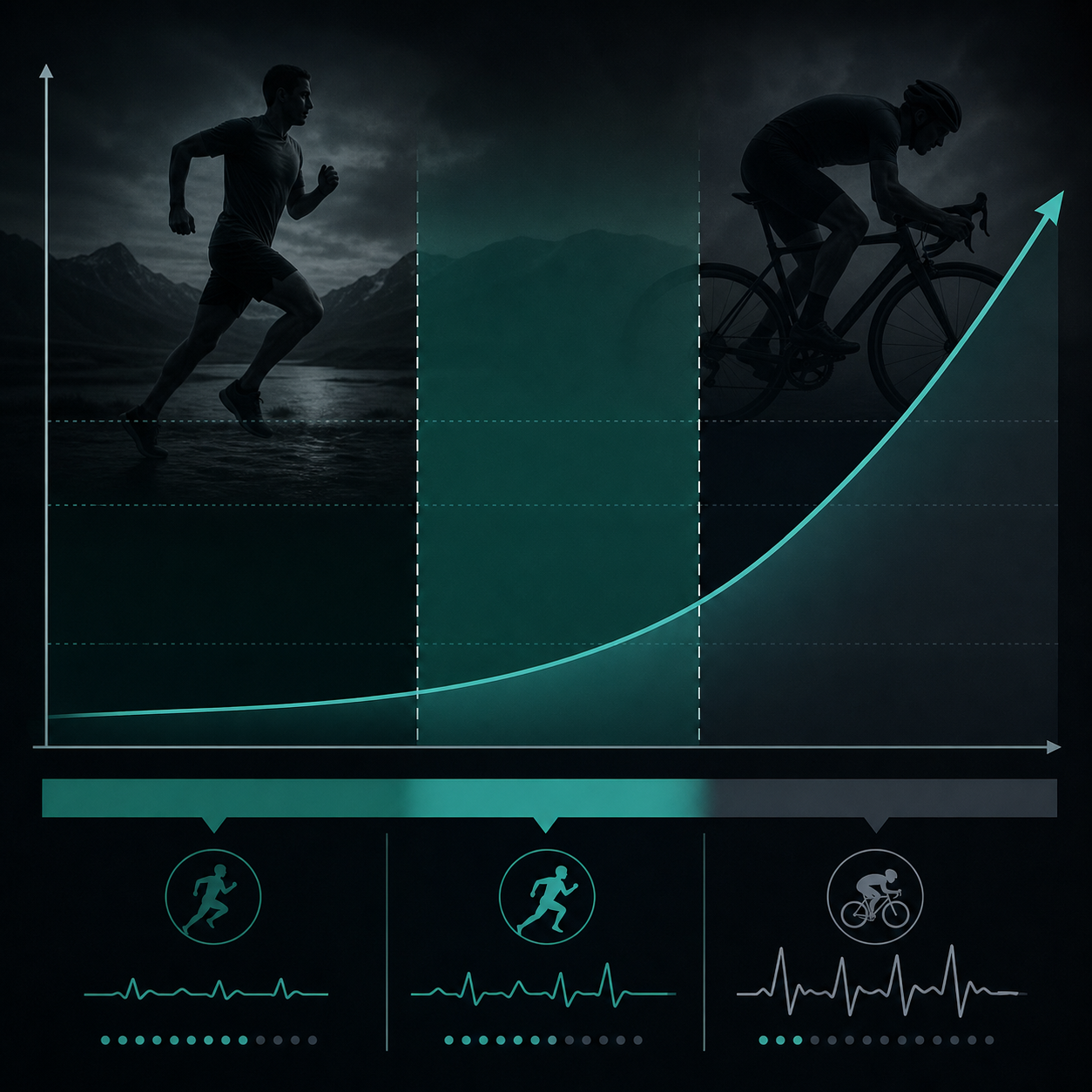
The practical takeaway is simple: lactate threshold is not a magic switch. It is a region on a curve.
Why Lactate Threshold Matters
Lactate threshold matters because it describes sustainable output. VO2 max tells you about the ceiling of your aerobic system. Economy tells you how much energy it costs to move at a given pace or power. Lactate threshold tells you how much of your capacity you can use before the effort becomes hard to hold.
That is why threshold often predicts endurance performance better than a single maximum number for trained athletes. A runner with a slightly lower VO2 max may beat a runner with a higher VO2 max if the first runner can sustain a higher fraction of that ceiling and run economically. Jones and Carter reviewed endurance training adaptations and described lactate-threshold changes as one of the major parameters that can improve with training, along with VO2 max and economy (Jones & Carter, 2000).
For runners, a threshold estimate can anchor tempo runs, cruise intervals, and controlled race-specific work. For cyclists, threshold power can help separate endurance rides from tempo, sweet spot, threshold, and VO2 max work. For any endurance athlete, threshold helps answer a practical question: "Is this effort sustainable enough for the goal of today's workout?"
It also protects easy training. Many athletes do not train too hard because they love pain. They train too hard because moderate effort feels productive. Without a threshold reference, easy days quietly become tempo days, tempo days become threshold days, and hard days lose quality. A threshold estimate gives you a ceiling for controlled work and a reminder that most endurance volume should not live right at that ceiling.
What Threshold Feels Like
Lactate threshold is easier to use when you connect the science to a physical sensation. A threshold effort is hard and focused, but it is not frantic. Breathing is deep and regular. Talking is limited to short phrases. You can hold form, but you are paying attention. If someone asks whether you could keep going forever, the answer is no. If they ask whether you can hold the effort for another few minutes, the answer should usually be yes.
Below threshold, the effort feels more patient. You may be working, but the session is not asking for constant negotiation. This is where easy aerobic running, endurance rides, and long steady work should usually live. Heart rate may drift, especially in heat or late in a long session, but the effort should remain controlled.
Right around threshold, the margin becomes narrow. A small increase in pace or power can change the workout quickly. That is why threshold intervals are often prescribed with short recoveries and repeatable blocks. The goal is to spend time near the hard-steady boundary without falling into uncontrolled racing.
Above threshold, the effort starts demanding repayment. You can still work above threshold, and you should if the workout calls for it, but duration has to be shorter or recovery has to be included. This is the territory of VO2 max intervals, hard hill repeats, race surges, and finishing kicks. It is useful, but it is not the place to park most of your weekly training.
The feel test is not perfect. Some athletes under-rate hard work because they are competitive. Others over-rate it because they are new to structured training. Heat, caffeine, stress, poor sleep, and group dynamics can distort perception. Still, perceived effort is an important check on any threshold number. If the target says "threshold" but the effort feels like a race from the first few minutes, trust the warning sign.
How Lactate Threshold Is Measured
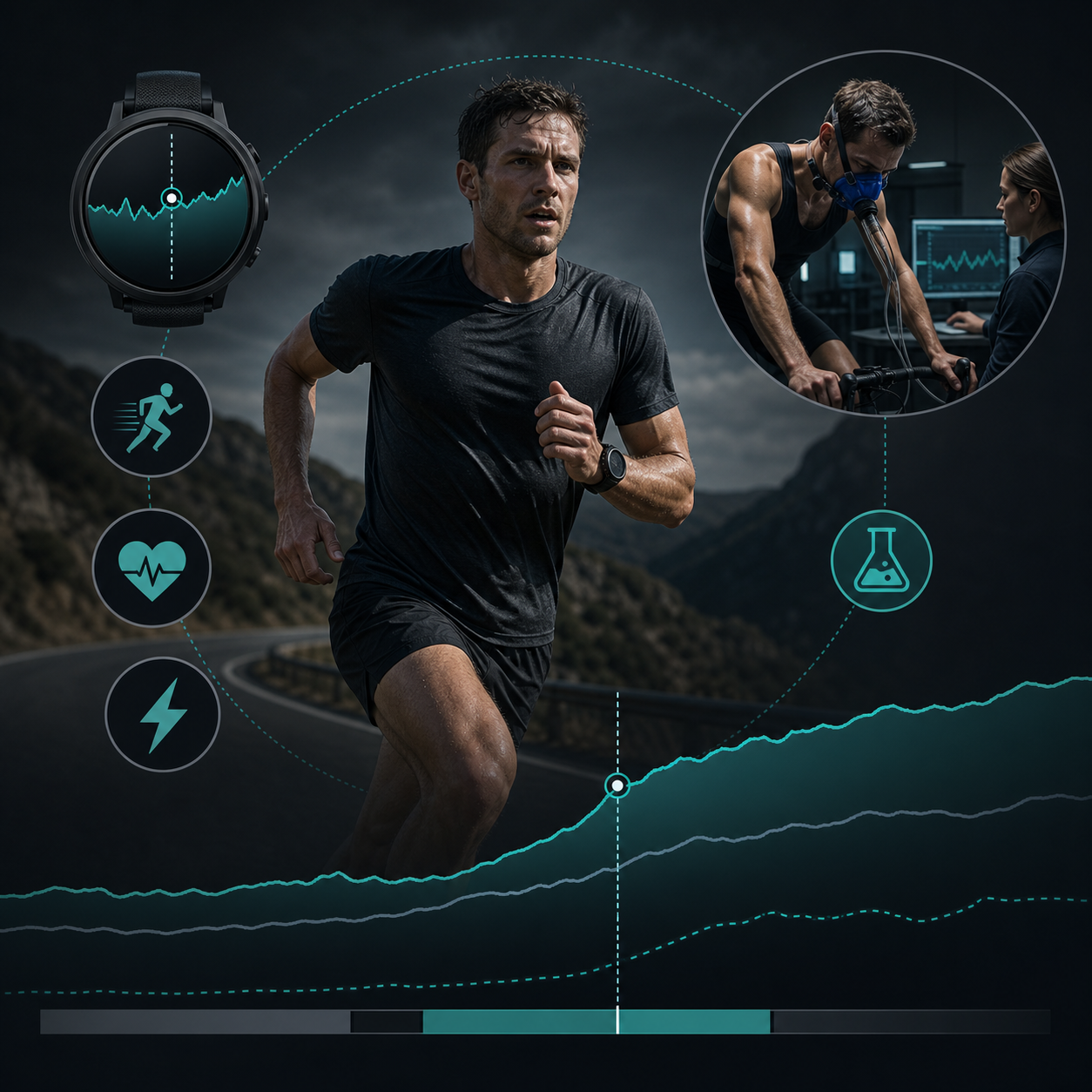
The most direct way to assess lactate threshold is a lab test. You run on a treadmill or ride an ergometer while workload increases in stages. At the end of each stage, a small blood sample is taken, usually from a finger or ear. The lab plots blood lactate against pace, speed, or power, then identifies threshold points based on the chosen method.
Test design matters. Stage length, workload increments, warm-up, sampling timing, exercise mode, and analysis method can change the result. Bentley, Newell, and Bishop reviewed incremental exercise test design and warned that protocol choices affect endurance performance diagnostics (Bentley et al., 2007). That is why two labs can give slightly different threshold values for the same athlete.
Maximal lactate steady state testing is more demanding. Instead of one ramp test, the athlete repeats constant-load trials on different days to find the highest workload where lactate remains stable. This is closer to the steady-state idea behind threshold, but it takes more time and is less convenient for everyday athletes. Recent work has continued to discuss how maximal lactate steady state relates to endurance performance and how relevant it is as a prediction concept (Niemeyer et al., 2022).
Field tests are less precise but much easier to repeat. A common running approach is a hard, even 30-minute time trial after a good warm-up, using the final 20-minute average heart rate as an estimate of lactate threshold heart rate. Pace from a 30- to 60-minute race effort can also be useful if conditions are fair. Cyclists often use power-based tests such as a 20-minute test with an adjustment, a longer steady effort, or model-based critical power estimates.
None of these field tests is identical to a blood lactate test. They are practical anchors. Their value comes from repeatability, not perfection.
Estimate Your Threshold Bands
If you already have a lab result, coach result, race estimate, 30-minute field test, threshold heart rate, threshold pace, or threshold power, you can convert it into planning bands. The calculator below uses the threshold anchor as a hard-steady reference and gives simple bands for easy aerobic, steady, tempo, threshold, and over-threshold work.
It is intentionally conservative. It does not diagnose your lactate curve. It does not know your sport history, heat tolerance, altitude, fatigue, or biomechanics. It gives a starting point you can compare with real workouts.
Use the threshold row as the anchor. The easy and steady rows should feel clearly below threshold. Tempo should feel controlled but focused. Threshold work should feel like a hard steady effort you can repeat, not a sprint. The over-threshold row is for shorter repeats, surges, and workouts where recovery is built into the session.
Which Threshold Anchor Should You Use?
Heart rate, pace, and power all describe threshold from a different angle. The best anchor depends on the sport, the session, and the conditions.
Heart rate is useful because it reflects internal load. If your threshold heart rate is 172 bpm, then a workout sitting near that value is creating a high internal demand even if pace is slower than usual. That makes heart rate helpful in heat, hills, altitude, or fatigue. The weakness is lag. Heart rate responds slowly to short intervals, drifts during long sessions, and can be affected by hydration, sleep, caffeine, stress, and sensor accuracy.
Pace is useful for running when the route is flat and repeatable. It is immediate, easy to understand, and closely tied to race goals. The weakness is context. A 7:30 per mile threshold estimate means something different on a track, a hilly trail, a windy road, or a hot day. Pace works best when the course and conditions are stable enough that the number reflects effort.
Power is useful because it responds quickly to output. Cyclists rely on power for this reason, and running power can be helpful for some athletes when terrain changes. The weakness is that power is still a model, especially in running, and different devices may not agree. Power also does not tell you how your body is responding internally; it needs to be interpreted with heart rate and perceived effort.
Most athletes get the best result by using a hierarchy. Let the primary workout goal choose the main anchor, then use the other signals as context. A flat threshold run might be paced by pace while heart rate checks whether the effort is drifting too high. A cycling threshold session might be paced by power while perceived effort checks whether the target is realistic. A hot long run might use heart rate as the ceiling while pace becomes secondary.
How To Do A Simple Field Test
A useful field test is boring on purpose. Choose a flat route, track, treadmill, or indoor trainer. Warm up well. Then complete a hard steady 30-minute effort that you can pace evenly. Do not sprint the first five minutes. Do not turn the final five minutes into a desperate kick unless the test protocol calls for it. The goal is the best sustainable average, not the most dramatic finish.
For heart rate, many coaches use the final 20-minute average because heart rate lags at the start of the test. For pace or power, the full effort average can be useful if the pacing was even. If you are using a 20-minute cycling test, remember that many FTP-style protocols apply an adjustment because a 20-minute maximum is usually higher than what you can hold for about an hour.
Good field-test conditions matter:
- Use similar terrain or equipment each time.
- Avoid testing in unusual heat, heavy wind, illness, or deep fatigue.
- Use a chest strap if heart-rate accuracy matters.
- Record perceived effort and conditions, not just the number.
- Retest after a training block, not every week.
The test should feel hard, but it should be appropriate for your training status. If you are new to endurance training, returning from illness, managing a medical condition, or unsure whether maximal testing is safe, use a supervised test or a submaximal estimate instead.
How To Train Lactate Threshold
Lactate threshold improves through a mix of easy volume, controlled moderate work, threshold-specific sessions, and recovery. The biggest mistake is assuming that every workout must be at threshold to improve threshold.
Easy aerobic training builds the base that supports lactate clearance, mitochondrial density, capillary development, and durability. This is why many successful endurance programs include a large amount of low-intensity work. Beneke and colleagues note that high-performance endurance athletes often devote most training to low-intensity domains, and they caution against the simple idea that training exactly at threshold is uniquely superior (Beneke et al., 2011).
Threshold-specific work still has a place. It teaches you to hold strong aerobic output without falling apart. It also gives useful feedback: if a threshold workout that should be repeatable feels like a race, the target may be too high or you may be carrying fatigue.
Common threshold sessions include:
- 20-40 minutes continuous at controlled threshold effort.
- 3 x 10 minutes at threshold with short easy recoveries.
- 4-6 x 6 minutes at threshold with controlled recoveries.
- Cruise intervals such as 5-8 x 1 kilometer for runners.
- Cycling intervals such as 3 x 12 minutes or 2 x 20 minutes near threshold power.
The best threshold workouts finish with control. You should feel that you worked hard, but not that you emptied the tank. If you need several days to recover, the session probably crossed into race effort or the total dose was too high.
Tempo work below threshold is also valuable. It lets you accumulate more time near the aerobic pressure zone without the same recovery cost. For many athletes, a progression from easy volume to tempo to threshold intervals works better than jumping straight into repeated all-out tests.
Lactate Threshold, Zone 2, Tempo, And VO2 Max
Lactate threshold sits in the middle of several terms athletes use every week.
Zone 2 is usually below the first major threshold. It should feel conversational, repeatable, and aerobic. Lactate is present, but production and clearance are well matched. If your heart rate drifts upward and breathing becomes strained, you may have moved above the intended easy domain.
Tempo is below or near threshold depending on the system. It is controlled moderate-to-hard work, often useful for race-specific durability. Tempo should not feel like a time trial every time.
Threshold is the hard steady anchor. It is close to the intensity where lactate accumulation becomes much harder to stabilize. It is not comfortable, but it should be controlled for properly designed intervals.
VO2 max work is above threshold. These efforts are short enough, or broken into intervals, because they demand a higher fraction of your aerobic ceiling. They can improve peak aerobic capacity, but they carry more fatigue and should not replace the aerobic base.
Functional threshold power and critical power are related but not identical to lactate threshold. They are performance-model or field-test concepts, while lactate threshold is tied to blood lactate behavior. They often overlap enough to be useful, but the words should not be treated as perfect synonyms.
Common Mistakes
The first mistake is using a stale number. If your threshold heart rate, pace, or power came from a test six months ago, it may not reflect your current fitness. Training, detraining, heat, altitude, illness, weight change, equipment, and route all affect the practical target.
The second mistake is testing too often. A hard threshold test is a workout. If you test every week, you may turn the training plan into a string of mini races. Retest after a meaningful block or when repeated workouts suggest the number is wrong.
The third mistake is copying someone else's threshold. Two athletes with the same race time may have different heart-rate thresholds. Two cyclists with the same threshold power may recover differently. Heart rate especially is individual. Percentages can help, but your tested value matters more than a generic formula.
The fourth mistake is treating threshold as a moral score. A higher threshold is useful only when it helps performance and fits the goal. If raising threshold comes at the cost of durability, recovery, mechanics, or consistency, the plan may be too narrow.
The fifth mistake is ignoring conditions. Heat can raise heart rate. Hills change pace. Wind changes power demand. Fatigue can make threshold feel harder at the same number. Devices can estimate, but the athlete still has to interpret.
When To Update Your Threshold
Update your threshold when multiple signals agree. A single great workout does not prove your threshold jumped. A single bad workout does not prove it fell.
Good reasons to update include:
- A recent race or time trial strongly supports a new pace or power.
- Repeat threshold workouts feel easier than expected at the old target.
- You complete a structured field test in normal conditions.
- A lab or coach test gives a new result.
- Your training log shows several weeks of mismatch between targets and perceived effort.
Bad reasons include one hot-day workout, a watch estimate after a downhill run, a group ride with inconsistent power, or a single interval session where you were unusually fresh. Threshold should be stable enough to guide training, not so reactive that it changes every time your mood changes.
Continue From Testing to Training
- Build and progress threshold workouts
- Calculate threshold heart-rate, pace, and power bands
- Compare lactate threshold with VO2 max and running economy
- Explore the Physiology guide hub
Conclusion
Lactate threshold is the exercise intensity where lactate begins to accumulate faster than your body can keep it stable. It matters because it describes sustainable output: the pace, power, or heart-rate effort you can hold before fatigue starts accelerating.
The exact number depends on the test. Lab lactate tests, maximal lactate steady state tests, field tests, race estimates, watch estimates, FTP, and critical power are related tools, not interchangeable truths. The more repeatable the method, the more useful the result.
Use lactate threshold as an anchor, not an identity. Keep easy training easy. Use tempo and threshold work deliberately. Retest when the evidence is strong. Then let the number serve the training rather than letting training serve the number.
Put Your Threshold Into Training
Once you have a credible threshold estimate, use the threshold workout guide to select interval formats and control pace, power, heart rate, and recovery.
Related